


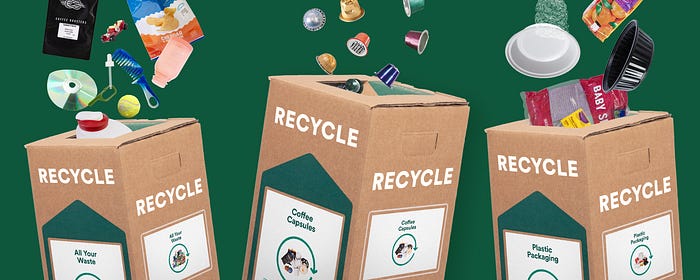
Image courtesy of Terracycle.
I approached this conversation with a fair amount of skepticism, because the recyclability of many items has long been contested. Specialized recyclers, including TerraCycle, have been subject to claims that their promise of “recycling the unrecyclable” is aspiration, more than reality.
I wanted to understand the business model clearly. And I wanted to understand, from someone who has spent a lifetime inside the problems associated with waste, whether we are making any progress at all. The answer, straight from Tom Szaky’s mouth, is not fast enough.
And yet he keeps going. Here is what I came to understand from our conversation, on episode 295 of Care More Be Better.
The Least Innovative Industry on Earth
Early in our conversation, Tom shared that garbage is the least innovative industry per revenue dollar. This is true here in the US, and globally.
The reason is almost redundant: waste is gross. While this doesn’t apply to all waste, most is physically, viscerally, literally repulsive. Words like “waste” and “refuse” compel us to think of rotting food and the effluent from dumpsters that turns your stomach. It does not attract the kinds of ambitious, creative, risk-tolerant people who flock to AI, biotech or climate tech. The offices of traditional garbage companies, Tom noted, still feels like it’s stuck in the era of the fax machine. The mentality is similarly pickled and preserved.
As a result, the industry is vulnerable to what Tom calls “silver-bullet thinking”: the next big idea that will solve everything. Compostable packaging. Chemical recycling. Each one arrives with enormous hype, runs into the fundamental laws of waste, and fades. Ten years later, the next one appears.
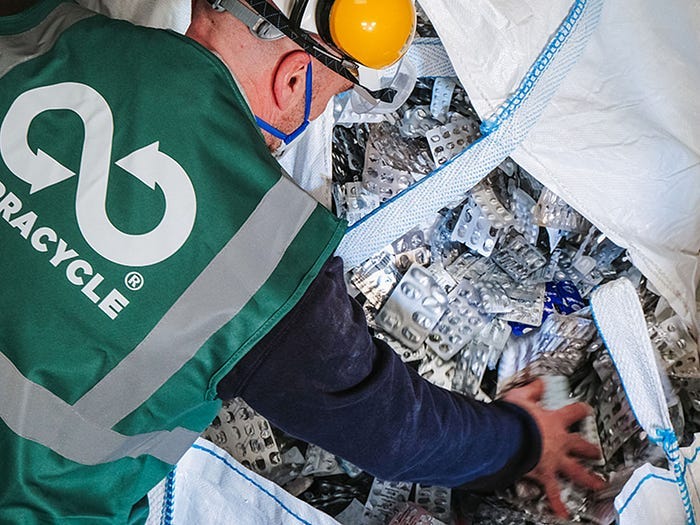
Blister pack recycling. Photo courtesy of Terracycle.
The fundamental law Tom keeps returning to is this: recycling is urban mining. Conventional recyclers only collect what is profitable to recycle. As we make products cheaper — and the dominant megatrend in consumer goods is relentless cost reduction — more and more of what we produce fails that profitability test. Recyclers ignore it. It goes to landfill.
TerraCycle’s model is inverted. They only work on what is NOT profitable to recycle. The cigarette butts. The dirty diapers. The chip bags. The Femcare products. The sex toys. None of these have a market that covers the cost of collection and processing. So TerraCycle finds someone — a brand, a retailer, a government — to fund the gap, and they provide a legal guarantee that everything collected will be recycled.
It is a remarkable model. It is also, Tom admits, not going to be enough.
Understanding How the Chess Pieces Move
The insight Tom described as the single biggest learning of 25 years is what he referred to as “the chess piece problem.”
Every actor in the waste and sustainability system — a consumer, a brand, a retailer, a government — has its own logic and way of navigating problems. You can’t get any of them to do what you want by appealing to what you care about. You have to focus instead on what they care about.
He used diaper recycling as an example. If you went to a diaper company and said you had designed a diaper recycling method, you would get a perplexed, disgusted response. Diaper companies make money by selling more diapers, not less, and what of the biohazard problem?
But if you were instead to say, “every time someone deposits any brand of diaper in our recycling bin, they receive coupons for your brand, which helps shift market share to you. That framing creates an incentive that matches how the chess piece moves. It plays to their interests. TerraCycle created a diaper recycling program based on that selfish concern and ran it in the Netherlands and Japan. The brand funded diaper recycling not because it was good for the environment, but because it directly improved their market share.
“Understanding what really motivates financial flow is the unlocking principle in everything we have ever tried to scale,” Tom said. It is a lesson that applies to every industry.
Why Loop Only Worked in France
Around 2017, Tom began investing in reuse — the idea that packaging should be cleaned and refilled rather than recycled or discarded. Ten years of profits, plus $50 million in additional capital, went into building Loop: a platform that partnered with 200 consumer product companies and major retailers across Canada, the US, UK, France, and Japan. Loop had the potential to move the refill concept from the artisanal shops that debuted it to a mainstream consumer audience.
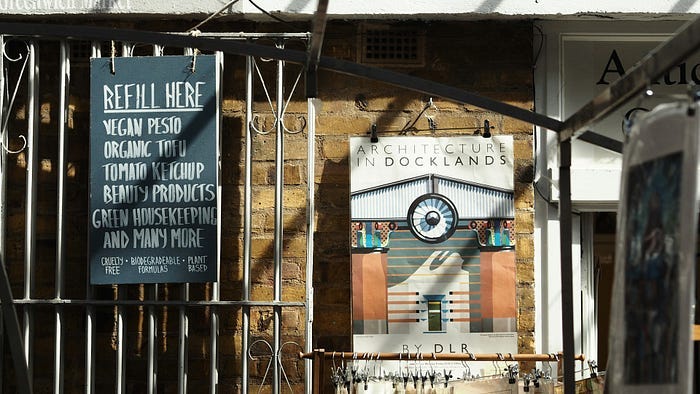
The good news — it was a hit! Consumers everywhere loved it! They bought the products. They returned the used packaging to be refreshed. And picked up a replacement. The problem was that nobody would scale it… Except in France.
The reason, Tom divined, related back to that same chess piece problem. Consumer product companies grow by selling more products. In the consumer marketplace, we call this “line extensions.” You might start by selling lotions and soaps, then extend your line to include shampoo, conditioner, and a hair mask. You sell two to three sizes of your top-sellers, and run BOGO (buy one, get one) promotions. Each new product means a greater potential sales volume, and a greater chance of repeat sales. Brands fight for double- and triple-facings of the same product across different sizes or packaging options. Reuse does the opposite. You buy the same product in a reusable container instead of a disposable one, and you would never buy two to save more. Promotions and sales have a lessened impact. The incremental sale — which is the lifeblood of how these companies grow — disappears.
But in France, they face regulatory pressures that both compel and subsidize reuse. Without needing to make the business case for incremental volume, the model worked. Loop is now the biggest reuse platform in France, with hundreds of products spanning from ice cream to dish soap.
The lesson: the right idea, deployed against the wrong chess piece logic, is doomed to fail. The same idea succeeds in a context where the regulatory environment changes the game. This is why Tom believes both voluntary action and government intervention need to happen simultaneously. Neither move on its own is sufficient.
Diapers as Medical Diagnostics
One of the genuinely surprising things Tom described is TerraCycle’s Discovery platform — the realization that certain waste streams carry valuable diagnostic data.
He presented a different perspective on the dirty diaper. It serves as a medical-grade carrier of a fecal sample. Fecal samples are standard diagnostic tools in the medical field. Your doctor prescribes them to analyze gut bacteria, immune function, and metabolic health. TerraCycle, through a collaboration with a lab that tracked COVID distribution across communities using sewage, validated that diaper analysis can predict children’s development — from their immune systems to their brains and eyes — while also providing data on other health indicators.

Photo by Marius Muresan on Unsplash
The service is not yet commercialized, but it has been validated. The model would look something like this: you receive a kit, put your diaper in it, and within a couple of weeks, you receive detailed health insights about your child. The same principle applies to Femcare products — which can serve as carriers of blood samples. Your body’s waste, it turns out, is full of data we have never bothered to extract because we find it too repulsive to think carefully about.
The Answer Nature Already Gave Us
Tom’s vision for the future of recycling is simple and demanding. He wants to eliminate the concept of waste and return to the way nature has always operated.
In nature, every output is someone else’s input. The fallen leaf becomes soil. The dead animal becomes a treasure trove of nutrients. Circularity is the norm. We invented the idea of waste in the 1950s when advanced materials and cheap manufacturing made disposability convenient and profitable. This also means that we can uninvent it. To undertake that work, it will require simultaneously making materials more valuable, getting governments to acknowledge the externalities they ignore, building reuse infrastructure at scale, and changing how we think about consumer responsibility. Ultimately, the weight of waste will have to fall back on the companies that are responsible for production — and the only path to that reality is through regulation.
“We are robbing future generations at the moment,” Tom said. “By not funding the externalities, life is cheap. We can live in abundance because of that robbery.”
That quote alone has kept me thinking since I clicked the record button over a month ago. Life may be “cheap,” but one way or another, we will always pay the bill when it comes due.
Listen to Episode 295 of Care More Be Better wherever you pick up your podcasts or on our website:
TerraCycle is at terracycle.com.
If you’re interested in the Regulation A investment opportunity Tom shared in our conversation — please read all SEC filings at invest.terracycle.com before making any decision.*
*This is not investment advice.